

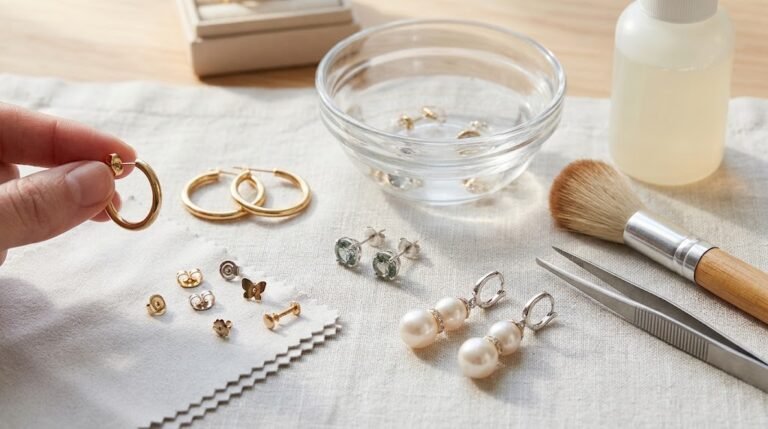
Earrings collect skin oils, sweat, makeup, hair products, and everyday dirt. Over time, this buildup can make jewelry look dull and leave residue around posts and backs. Regular cleaning helps maintain their appearance and keeps jewelry free from everyday grime.
Learning how to clean earrings starts with understanding their material. Gold, silver, stainless steel, pearls, and gemstones may need different cleaning methods. A solution that works for one pair could damage another.
The good news is that many everyday earrings can be cleaned at home using mild soap, lukewarm water, and a soft cloth. This guide explains how to clean different materials, care for posts and backs, and avoid common mistakes.
What to Clean Earrings With
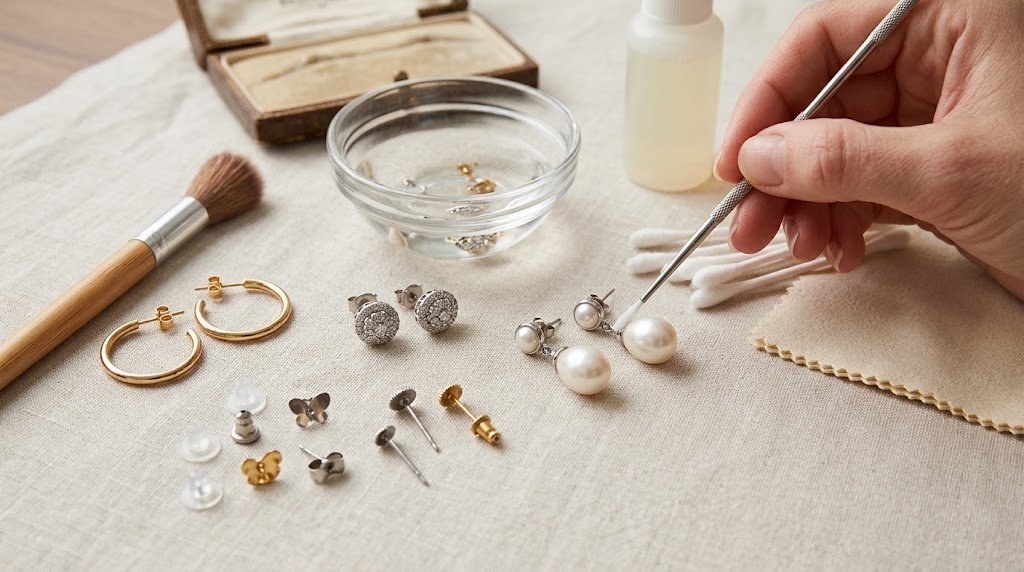
For many durable metal earrings, a gentle cleaning routine is enough. Gather these supplies before starting:
- A small, clean bowl
- Lukewarm water
- A few drops of mild dish soap
- A soft-bristled brush
- A soft, lint-free cloth
- A clean towel for drying
Avoid strong chemicals and abrasive materials unless the jewelry manufacturer specifically recommends them. If your earrings contain delicate stones, glued components, plating, or antique settings, check their care instructions first.
How to Clean Earrings at Home Step by Step
Step 1: Wash Your Hands
Wash your hands with soap and water before handling your earrings. Work over a clean surface with a towel underneath to reduce the chance of losing small posts or backs.
Step 2: Inspect the Earrings
Check the posts, clasps, backs, and gemstone settings. Look for loose stones, damaged plating, bent posts, or fragile connections.
If a stone is loose or the setting is damaged, avoid soaking or brushing the earring. Ask a jeweler to inspect it before cleaning.
Step 3: Prepare a Mild Cleaning Solution
For suitable metal earrings, mix a few drops of mild dish soap into a bowl of lukewarm water. Avoid very hot water, particularly when cleaning jewelry with delicate gemstones or settings.
If you are unsure about the material, do not assume soaking is safe. Start with a slightly damp cloth until you can confirm the correct method.
Step 4: Clean Gently
Dip a soft brush into the solution and gently remove dirt around crevices, posts, and backs. Avoid forceful scrubbing, especially near gemstones or delicate connections.
For pearls and other sensitive materials, use a soft cloth lightly dampened with an appropriate cleaning solution instead of soaking or brushing aggressively.
Step 5: Rinse and Dry
For materials that tolerate water, rinse away soap using clean water. Work over a bowl rather than an open sink so small earrings do not slip down the drain.
Pat the earrings dry with a soft cloth, paying attention to posts, backs, hinges, and small gaps. Allow them to dry completely before wearing or storing them.
How to Clean Earring Posts and Backs
Posts and backs deserve special attention because they sit close to the skin and can collect oils, dead skin cells, and product residue.
Cleaning Earring Posts
For durable metal posts, gently wipe away residue with a soft cloth. If the material allows it, use mild soapy water and a soft brush to clean around the post.
Rinse if needed and dry thoroughly. Avoid scraping buildup with sharp tools, which can scratch the metal or damage a coating.
Cleaning Earring Backs
Remove detachable backs only if they come off safely. Clean suitable metal backs with mild soapy water, paying attention to grooves and butterfly clasps.
Do not force stuck components apart. If a back is bent, corroded, or no longer holds securely, replacing it may be safer than repairing it at home.
Important: Cleaning jewelry is different from caring for a healing piercing. For new piercings, follow your piercer’s aftercare instructions and avoid putting household cleaning products on healing skin.
How to Clean Different Types of Earrings
Different materials react differently to water, chemicals, and brushing. Use this table as a guide and follow the manufacturer’s instructions when available.
| Earring Material | Recommended Method | What to Avoid |
|---|---|---|
| Solid gold | Lukewarm water, mild soap, soft brush | Bleach and harsh chemicals |
| Sterling silver | Silver-safe polishing cloth or suitable cleaner | Abrasive scrubbing |
| Stainless steel | Mild soapy water and soft cloth | Strong chemicals and rough pads |
| Diamond earrings | Mild soapy water if the setting is secure | Aggressive scrubbing or loose-stone soaking |
| Pearl earrings | Soft, slightly damp cloth | Soaking and harsh cleaners |
| Opal or delicate gemstones | Gentle, material-specific cleaning | Ultrasonic cleaners and sudden temperature changes |
| Gold-plated earrings | Soft, slightly damp cloth | Long soaking and abrasive cleaners |
How to Clean Gold Earrings
Solid gold earrings can often be cleaned with lukewarm water and mild soap. Use a soft brush to remove dirt, rinse carefully, and dry thoroughly.
Gold-plated earrings need more care because aggressive cleaning can wear away the thin outer layer. Use a soft cloth and avoid abrasive polishing or long soaking.
How to Clean Silver Earrings
Sterling silver may tarnish when exposed to air, moisture, and certain chemicals. A silver polishing cloth or cleaner specifically intended for your jewelry is often a good option.
Avoid automatically using baking soda, toothpaste, or rough scrubbing. These methods can scratch some finishes or damage decorative details. If your earrings include pearls or gemstones, choose a method safe for the entire piece.
How to Clean Pearl Earrings
Pearls are delicate and can be damaged by chemicals and abrasive materials. Wipe them gently with a soft, slightly damp cloth and dry them carefully.
Do not soak pearl earrings or use strong jewelry cleaners unless the manufacturer confirms that the product is suitable. Keep pearls away from perfume, hairspray, and other cosmetics.
How to Clean Gemstone Earrings
Gemstones vary in hardness, treatment, and sensitivity. Diamonds and some other durable stones may tolerate gentle cleaning, while opals, turquoise, emeralds, and treated stones may require more cautious care.
If you are unsure what a gemstone is or how it has been treated, use a soft cloth and ask a qualified jeweler for advice before applying a cleaning solution.
How Often Should You Clean Earrings?
Cleaning frequency depends on how often you wear your earrings, the products they contact, and your skin’s sensitivity.
- Frequently worn earrings: Wipe them after wearing and clean them more thoroughly as needed.
- Occasionally worn earrings: Clean them before wearing if they have been stored for a long time.
- Pearl and delicate gemstone earrings: Wipe gently after use and follow material-specific care instructions.
- Posts and backs: Inspect regularly for residue, damage, or buildup.
A simple routine is more useful than waiting until earrings become visibly dirty.
Common Earring Cleaning Mistakes to Avoid
Using Harsh Chemicals
Bleach, strong household cleaners, and unsuitable solvents can damage metals, plating, and gemstones. Choose a gentle method that matches the material.
Scrubbing Too Hard
Rough brushes and abrasive powders may scratch the surface or damage delicate settings. Use light pressure and stop if you notice a change in the finish.
Forgetting the Backs
Earring backs can collect residue even when the front looks clean. Inspect and clean them separately when it is safe to do so.
Storing Earrings While Damp
Moisture can contribute to tarnishing and may affect some materials. Dry earrings thoroughly before placing them in a jewelry box.
Using the Same Method for Every Material
A method that works for solid gold may be unsuitable for pearls, plated jewelry, or treated gemstones. Identify the material before cleaning.
Frequently Asked Questions
What is the easiest way to clean earrings at home?
For many durable metal earrings, use lukewarm water, a few drops of mild soap, and a soft brush. Rinse carefully and dry completely. Delicate materials may need a different method.
What should I use to clean earrings?
Mild soap, lukewarm water, a soft cloth, and a soft-bristled brush are useful for many metal earrings. Check whether your particular metal, gemstone, or finish can safely be exposed to water.
Can I use rubbing alcohol to clean earrings?
Do not assume rubbing alcohol is safe for every earring or piercing. It can damage some finishes and delicate materials, and it is not recommended for cleaning a healing piercing. Follow the jewelry maker’s instructions.
Can I clean earrings with toothpaste?
Toothpaste can be abrasive and may scratch metal or damage decorative finishes. A gentle, material-appropriate cleaner is generally a safer choice.
How do I clean dirty earring backs?
If the backs are made of suitable metal, clean them gently with mild soapy water and a soft brush. Rinse and dry completely, and replace damaged or loose backs.
Should I remove earrings before cleaning my ears?
For fully healed piercings, you can remove earrings when needed and clean the jewelry separately. For a new or healing piercing, follow professional aftercare guidance and do not remove starter jewelry unless your healthcare professional advises it.
Conclusion
Knowing how to clean earrings helps you maintain their appearance and remove everyday residue without damaging delicate materials. For many durable metal earrings, lukewarm water, mild soap, and gentle brushing are enough. Posts and backs should also be checked and cleaned carefully.
Always choose a method based on the metal, gemstone, and finish. Avoid harsh chemicals, aggressive scrubbing, and unsafe shortcuts, especially with pearls, opals, plated jewelry, or healing piercings. With regular gentle care and proper storage, your earrings can stay clean and ready to wear.
