

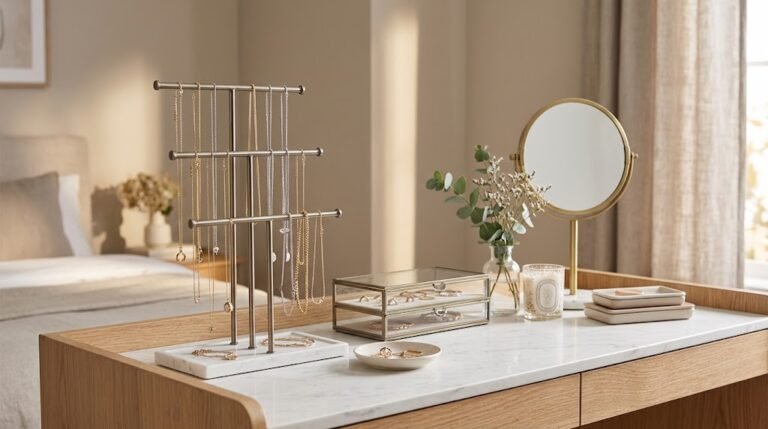
Necklaces are beautiful accessories, but storing them can become frustrating when chains get tangled, knots become difficult to remove, or delicate pieces get damaged. Whether you own a few everyday necklaces or a large jewelry collection, choosing the right storage method can help keep everything neat and easy to access.
Learning how to store necklaces properly does not require expensive organizers or a large jewelry cabinet. Simple solutions such as individual pouches, necklace hooks, drawer organizers, and compartment boxes can prevent tangling and protect your jewelry.
In this guide, you will discover practical necklace storage ideas, ways to organize different chain styles, and common mistakes to avoid.
Why Do Necklaces Get Tangled?
Necklaces usually become tangled when their chains move freely and overlap. Thin chains are especially likely to twist around other jewelry because they are lightweight and flexible.
Several common situations can cause tangling:
- Storing multiple necklaces in one jewelry box.
- Leaving chains loose inside drawers.
- Keeping necklaces together in travel bags.
- Placing long chains over shorter ones.
- Storing necklaces without closing their clasps.
- Moving jewelry containers frequently.
The best solution is to give each necklace its own storage space. Keeping chains separated reduces friction, knots, and unnecessary handling.
1. Use Individual Jewelry Pouches
Individual jewelry pouches are one of the easiest ways to protect necklaces. Each necklace stays separate, preventing chains from wrapping around other pieces.
Soft fabric pouches are suitable for many everyday necklaces. Choose a pouch that fits the chain without forcing it into a tight knot.
How to Use Jewelry Pouches
- Hold the necklace by its chain and gently straighten it.
- Close the clasp to reduce movement.
- Place the necklace inside its own pouch.
- Keep the pouch in a dry drawer or jewelry box.
- Label pouches if you own several similar necklaces.
Choose clean, soft, and dry pouches. For delicate metals or gemstones, use storage materials recommended for that jewelry type.
2. Hang Necklaces on Wall Hooks
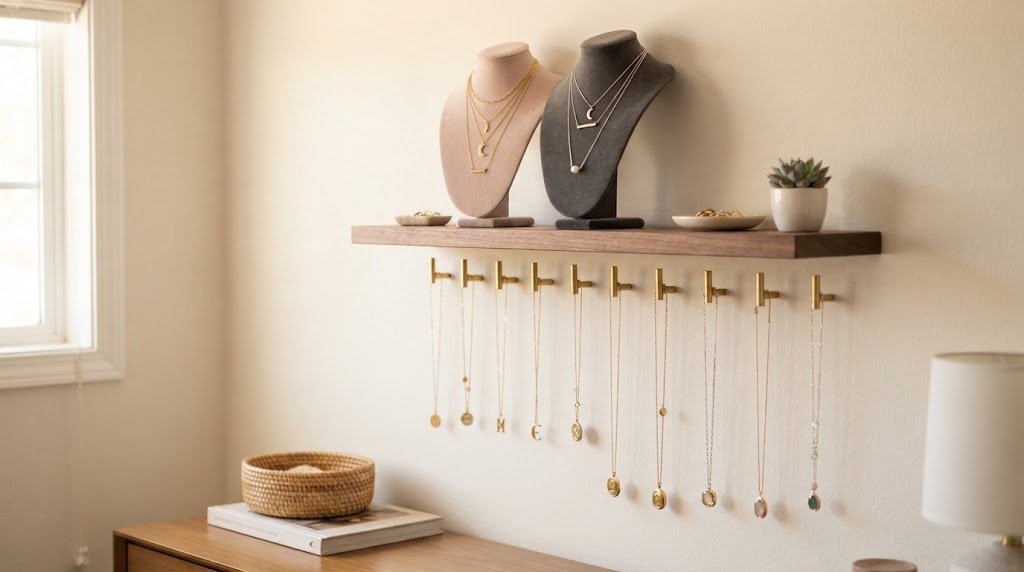
Hanging necklaces is a practical solution when you want to keep your collection visible. Small wall hooks, decorative jewelry racks, and mounted organizers allow chains to hang separately.
This method works particularly well for longer necklaces and frequently worn pieces.
Benefits of Wall-Mounted Storage
- Keeps necklaces separated.
- Makes jewelry easy to see.
- Saves drawer space.
- Provides quick access to everyday accessories.
- Can become part of your bedroom decoration.
Install hooks far enough apart so that neighboring necklaces do not overlap. Keep the organizer away from direct sunlight, humidity, and bathroom moisture.
3. Choose a Necklace Organizer Box
A jewelry organizer box with individual compartments can make necklace storage easier. Instead of placing every piece together, you can assign a separate section to each necklace.
Look for boxes with soft lining, divided sections, and enough space for longer chains.
Features to Look For
- Individual necklace compartments.
- Soft interior lining.
- Secure closures.
- Removable trays.
- Enough height for pendants.
- A dust-resistant cover.
A box with adjustable dividers can be especially useful if your collection includes different chain lengths and pendant sizes.
4. Use a Straw to Prevent Chain Tangling
A simple drinking straw can help prevent thin necklaces from becoming tangled during storage or travel.
This method works by keeping the chain straight instead of allowing it to fold and twist.
Steps to Use This Method
- Choose a clean straw that is wide enough for the necklace chain.
- Open the necklace clasp.
- Thread one end of the chain through the straw.
- Pull the chain through until both ends are outside.
- Close the clasp.
- Store the necklace in a pouch or jewelry case.
For longer necklaces, you may need a longer straw or a suitable alternative. Do not force thick chains or delicate pieces through a narrow opening.
5. Store Necklaces in a Drawer Organizer
If you prefer keeping jewelry out of sight, drawer organizers are an excellent option. They divide a drawer into separate sections, making it easier to organize necklaces by style, length, or material.
How to Organize a Necklace Drawer
- Place everyday necklaces in the easiest-to-reach sections.
- Keep delicate chains in separate compartments.
- Store statement necklaces in larger sections.
- Use small dividers for pendants and charms.
- Avoid piling jewelry on top of one another.
Measure your drawer before purchasing an organizer. A properly fitted tray will stay in place and prevent jewelry from moving around whenever the drawer opens.
6. Use a Travel Jewelry Case
Traveling with necklaces requires extra care because movement inside luggage can quickly create knots. A travel jewelry case provides separate sections for different pieces.
Choose a compact case with necklace holders, individual pockets, or fastening straps.
Travel Storage Tips
- Close every necklace clasp before packing.
- Use separate compartments for each piece.
- Keep delicate chains in individual pouches.
- Place the jewelry case inside your carry-on luggage.
- Avoid storing necklaces loosely in handbags.
For especially delicate or valuable jewelry, consider carrying it separately and keeping it secure while traveling.
7. Organize Necklaces by Length and Style
Organizing necklaces by length and style makes it easier to find the right accessory without disturbing the rest of your collection.
You can create separate groups for short chains, medium necklaces, long necklaces, and statement pieces.
| Necklace type | Suggested storage method |
|---|---|
| Chokers | Individual compartments |
| Short chains | Small hooks or pouches |
| Medium necklaces | Necklace organizer box |
| Long necklaces | Separate hanging hooks |
| Pendant necklaces | Individual padded sections |
| Delicate chains | Soft individual pouches |
| Statement necklaces | Larger compartments |
You can also organize necklaces by how frequently you wear them. Keep everyday pieces accessible and special-occasion jewelry protected in a separate section.
8. Choose the Right Storage for Different Materials
Different necklace materials may need different storage conditions. Some metals can tarnish when exposed to moisture, air, or certain chemicals, while pearls and other delicate materials require extra care.
Gold Necklaces
Gold jewelry should be stored separately to prevent scratches from other pieces. Use a soft pouch or lined jewelry compartment.
Silver Necklaces
Silver can tarnish over time. Store silver necklaces in suitable anti-tarnish pouches or jewelry storage materials designed for silver.
Pearl Necklaces
Pearls are delicate and can be damaged by chemicals, rough surfaces, and excessive dryness. Store them separately in a soft pouch and avoid airtight storage unless the jewelry manufacturer recommends it.
Fashion Jewelry
Costume jewelry may contain coatings, glued components, or mixed materials. Keep these pieces dry and separate to protect their finish.
| Material | Storage recommendation | Main concern |
|---|---|---|
| Gold | Separate soft pouch | Scratches |
| Silver | Anti-tarnish storage | Tarnishing |
| Pearls | Soft breathable pouch | Surface damage |
| Stainless steel | Dry compartment | Scratches |
| Fashion jewelry | Individual pouch | Coating damage |
9. Keep Necklaces Away From Moisture and Heat
Where you store necklaces matters just as much as how you organize them. Bathrooms may seem convenient, but humidity can affect certain metals and jewelry materials.
Choose a cool, dry location away from direct sunlight and excessive temperature changes.
Places to Avoid
- Humid bathroom shelves.
- Windowsills with direct sunlight.
- Areas near heaters.
- Damp drawers.
- Uncovered surfaces near water.
Before storing a necklace, make sure it is clean and completely dry. Follow care instructions for gemstones and delicate materials.
Common Necklace Storage Mistakes
Even a good organizer cannot protect jewelry if it is used incorrectly. Avoid these common mistakes:
| Mistake | Better solution |
|---|---|
| Keeping all necklaces together | Use separate compartments |
| Leaving clasps open | Close clasps before storage |
| Storing jewelry in humid areas | Choose a dry location |
| Overfilling jewelry boxes | Leave enough room between pieces |
| Packing loose necklaces for travel | Use a travel jewelry case |
| Ignoring material requirements | Choose suitable storage for each material |
A little organization can save time and help preserve your necklaces for longer.
FAQs About How to Store Necklaces
1. What is the best way to store necklaces without tangling?
The best method is to store each necklace separately. Individual pouches, divided jewelry boxes, and spaced wall hooks can prevent chains from overlapping.
2. Should necklaces be stored hanging or lying flat?
Both methods can work. Hanging is useful for many chains and longer necklaces, while lying flat in separate compartments is suitable for delicate pieces and necklaces with pendants.
3. How do you store necklaces when traveling?
Use a travel jewelry case with separate compartments. Close each clasp and keep delicate necklaces in individual pouches to reduce movement and tangling.
4. Can I store multiple necklaces in one jewelry box?
Yes, if the box has separate compartments. Avoid placing loose chains together in one section because they can become tangled.
5. How do I store delicate gold chains?
Place each gold chain in its own soft pouch or lined compartment. Keep it away from harder jewelry that could scratch it.
6. Is it safe to store necklaces in plastic bags?
Clean, suitable jewelry bags can be useful for some pieces, but storage requirements vary by material. Avoid trapping moisture inside bags and follow the manufacturer’s care recommendations.
7. How often should I organize my necklaces?
Check your jewelry collection every few months. Remove dust, inspect clasps, and return each necklace to its designated storage space after wearing it.
Conclusion
Knowing how to store necklaces without tangling can make your jewelry collection easier to manage and help protect delicate chains. Individual pouches, wall hooks, divided organizer boxes, drawer trays, and travel cases are all practical solutions.
The best method depends on your available space, necklace styles, and storage needs. Keep chains separated, close clasps before putting jewelry away, and choose a dry location. With a simple organization system, you can keep your necklaces neat, accessible, and ready to wear
