

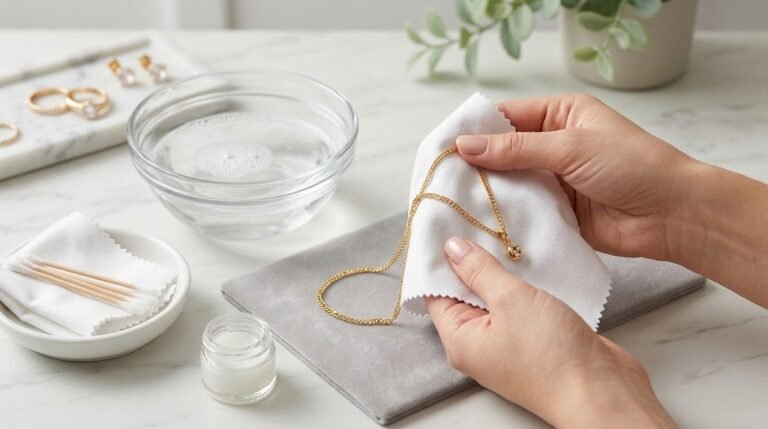
Gold-plated jewelry offers the beautiful appearance of gold at a more affordable price. However, its thin gold layer needs special care. Harsh cleaners, rough cloths, and excessive polishing can wear away the finish and expose the metal underneath.
Learning how to clean gold plated jewelry properly helps remove everyday dirt, body oils, and light residue while protecting its appearance. The best approach is usually simple: use lukewarm water, a small amount of mild soap, and a soft cloth.
This guide explains safe cleaning methods, how to clean tarnished gold plated jewelry, common mistakes to avoid, and practical gold plated jewelry care tips to help your pieces last longer.
What Is Gold-Plated Jewelry?
Gold-plated jewelry consists of a base metal covered with a thin layer of gold. The underlying metal may be brass, copper, silver, or another material, depending on the piece.
Unlike solid gold, gold-plated jewelry does not contain gold throughout the entire item. Its outer layer can gradually wear away through friction, moisture, chemicals, and repeated cleaning.
That is why gentle handling matters. The goal is to remove dirt without scratching or thinning the gold coating.
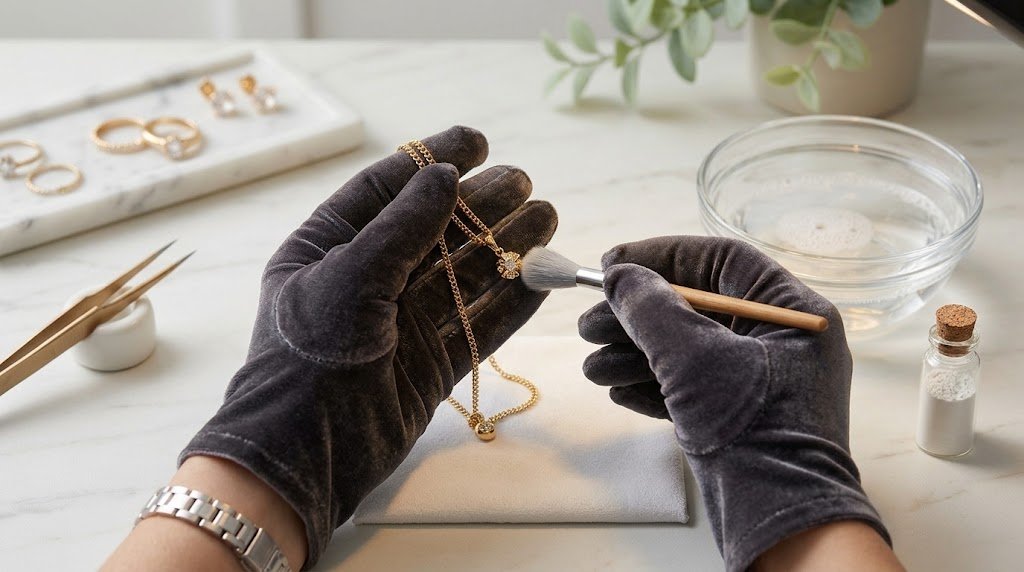
What You Need to Clean Gold-Plated Jewelry
You do not need expensive jewelry cleaners for routine maintenance. A few household supplies are usually enough.
| Cleaning Supply | Purpose |
|---|---|
| Lukewarm water | Helps loosen surface dirt |
| Mild liquid soap | Removes oils and everyday residue |
| Soft microfiber cloth | Wipes away dirt gently |
| Soft cotton cloth | Dries the jewelry |
| Small bowl | Holds the cleaning solution |
| Soft, clean towel | Provides a safe drying surface |
Avoid abrasive sponges, rough paper towels, stiff brushes, and strong chemical cleaners. These can scratch the surface or damage the plating.
How to Clean Gold Plated Jewelry Step by Step
The safest way to clean most gold-plated jewelry is to use a gentle soap solution and minimal rubbing.
Step 1: Prepare a Mild Cleaning Solution
Fill a small bowl with lukewarm water and add a few drops of mild liquid soap. Mix gently until the soap is distributed.
Avoid hot water because some jewelry contains glued stones or delicate decorative elements that may be sensitive to heat.
Do not add bleach, vinegar, baking soda, toothpaste, or household polishing chemicals.
Step 2: Wipe Away Surface Dirt
Dip a soft microfiber cloth into the solution and wring it out thoroughly. The cloth should be damp, not dripping wet.
Gently wipe the jewelry to remove fingerprints, body oils, and everyday residue. Use light pressure and avoid repeated rubbing in one spot.
For pieces with stones, textured details, or delicate settings, clean around these areas carefully without pulling or pressing against them.
Step 3: Remove Soap Residue
Use a second cloth lightly dampened with clean water to wipe away any remaining soap.
Do not leave soap on the surface, as residue can make jewelry look dull.
If the jewelry has glued decorations, pearls, or other water-sensitive components, avoid soaking it. Follow the manufacturer’s cleaning instructions when available.
Step 4: Dry the Jewelry Completely
Pat the piece dry with a clean, soft cotton or microfiber cloth. Avoid rubbing aggressively.
Allow it to air-dry completely on a clean towel before storing it. Do not use a hair dryer, heater, or direct high heat to speed up the process.
Important: Never put damp jewelry directly into a closed jewelry box. Trapped moisture can affect the underlying metal and other components.
How to Clean Tarnished Gold Plated Jewelry
If your jewelry has become dull, dark, or discolored, first determine whether the problem is surface residue or damage to the gold layer.
Start With Gentle Cleaning
When learning how to clean tarnished gold plated jewelry, begin with the mild soap method described above. Body oils, cosmetics, perfume, and everyday dirt can create a dull appearance that resembles tarnish.
Wipe gently, remove soap residue with a damp cloth, and dry the piece completely.
Understand the Difference Between Tarnish and Worn Plating
The appearance of gold-plated jewelry can change for several reasons.
| Problem | Possible Cause | Recommended Action |
|---|---|---|
| Dull surface | Oils, dust, or product residue | Clean gently with mild soap |
| Dark marks | Tarnish on exposed base metal or surface buildup | Try gentle cleaning and inspect |
| Silver or copper-colored patches | Gold layer may have worn away | Consider professional replating |
| Greenish marks | Possible reaction involving the underlying metal | Clean gently and inspect the jewelry |
| Sticky residue | Cosmetics, lotion, or perfume | Wipe with a damp soft cloth |
Cleaning can remove surface dirt, but it cannot replace missing gold. If the gold layer has worn away, stronger polishing may make the damage worse.
When to Stop Cleaning
Stop if the jewelry becomes more discolored, develops visible patches, or shows a different-colored metal underneath.
Do not try to scrape away discoloration or polish the area aggressively. A jeweler may be able to assess whether replating is suitable.
Cleaning Different Types of Gold-Plated Jewelry
Different jewelry pieces may require slightly different handling.
Gold-Plated Necklaces and Chains
Lay the chain on a soft cloth and wipe it gently with a damp microfiber cloth. Avoid pulling on delicate links or rubbing the chain against itself.
Dry carefully, including the clasp. Store necklaces separately to prevent tangling and friction.
Gold-Plated Rings
Rings collect soap, lotion, and dirt from frequent hand contact. Wipe them regularly with a soft, damp cloth and dry them thoroughly.
If a ring contains stones, check whether its setting or adhesive requires special care before using water.
Gold-Plated Earrings
Clean the front, back, and posts gently. Pay attention to areas that contact skin, but avoid soaking earrings with glued decorations or delicate components.
Make sure earrings are completely dry before storing or wearing them again.
Gold-Plated Bracelets
Bracelets experience frequent friction against skin, clothing, watches, and desks. Clean them gently and avoid vigorous polishing, particularly around clasps and connecting links.
Gold-Plated Jewelry Care: How to Prevent Damage
Regular care is often more effective than repeated deep cleaning. These habits can help preserve the finish.
Keep Jewelry Away From Chemicals
Perfume, hairspray, lotions, sunscreen, cleaning products, and chlorinated water may affect the finish over time.
Apply personal-care products first and allow them to dry before putting on jewelry. Remove gold-plated pieces before swimming, showering, exercising, or doing household cleaning.
Store Each Piece Separately
Store jewelry in a clean, dry place away from humidity. Use a soft pouch, lined jewelry box, or separate compartment to reduce scratches and friction.
Avoid placing several pieces together where chains, clasps, and decorative elements can rub against each other.
Put Jewelry On Last
Make jewelry the final step in your dressing routine. This reduces contact with cosmetics, perfume, hairspray, and other products.
Remove jewelry before bed or activities that cause repeated rubbing.
Clean It Only When Needed
Frequent cleaning and polishing can gradually wear away delicate plating. Wipe off visible oils or residue with a soft cloth after use, and use mild soap and water only when necessary.
Cleaning Methods You Should Avoid
Some popular jewelry-cleaning methods are unsuitable for gold-plated items.
| Method | Why to Avoid It |
|---|---|
| Toothpaste | Contains abrasives that may scratch the finish |
| Baking soda | Can be abrasive when rubbed against plating |
| Vinegar | Acidic solutions may affect exposed metals or delicate components |
| Bleach | Can damage metals and jewelry components |
| Ultrasonic cleaners | Vibrations may damage plating, stones, or settings |
| Jewelry polishing compounds | May remove or thin the gold layer |
| Stiff brushes | Can scratch the surface |
| Long soaking | May affect adhesives and allow moisture into delicate components |
Avoid commercial jewelry cleaners unless the manufacturer specifically confirms they are safe for your particular gold-plated item.
Frequently Asked Questions
Can you clean gold-plated jewelry with dish soap?
Yes, a small amount of mild dish soap diluted in lukewarm water is generally suitable for many gold-plated pieces. Use a soft cloth, avoid soaking delicate items, and dry the jewelry completely.
How often should gold-plated jewelry be cleaned?
Wipe away surface oils with a soft cloth after wearing. Use mild soap and water only when needed. The right frequency depends on how often you wear the piece and how much residue accumulates.
Can tarnished gold-plated jewelry be restored?
If the discoloration comes from surface dirt or residue, gentle cleaning may improve its appearance. If the gold layer has worn away and the base metal is showing, cleaning will not restore the missing gold. Professional replating may be an option.
Can I use a jewelry polishing cloth on gold-plated jewelry?
Use caution. Some polishing cloths contain compounds designed to remove tarnish, which can also wear away the thin gold layer. A plain, soft microfiber cloth is a safer choice for routine cleaning.
Does water damage gold-plated jewelry?
Brief contact with a damp cloth is generally fine for many pieces. However, repeated exposure to water, soaps, chlorine, and moisture may shorten the life of the finish. Avoid swimming and showering while wearing gold-plated jewelry.
Why does my gold-plated jewelry turn green?
Green marks may result from reactions involving the underlying metal, skin, sweat, or moisture. Gently clean the piece and inspect it. If the gold coating has worn away, the discoloration may continue until the item is replated or replaced.
Conclusion
Learning how to clean gold plated jewelry starts with one simple rule: use gentle methods and avoid abrasive products. A soft microfiber cloth, lukewarm water, and a little mild soap can remove everyday dirt without unnecessary friction.
When cleaning tarnished gold plated jewelry, remember that surface residue may be removable, but worn plating cannot be restored through cleaning alone. Protect your pieces by avoiding chemicals, storing them separately, and removing them before swimming, showering, or exercising.
With careful cleaning and consistent gold plated jewelry care, you can help your jewelry maintain its shine and enjoy it for longer
