

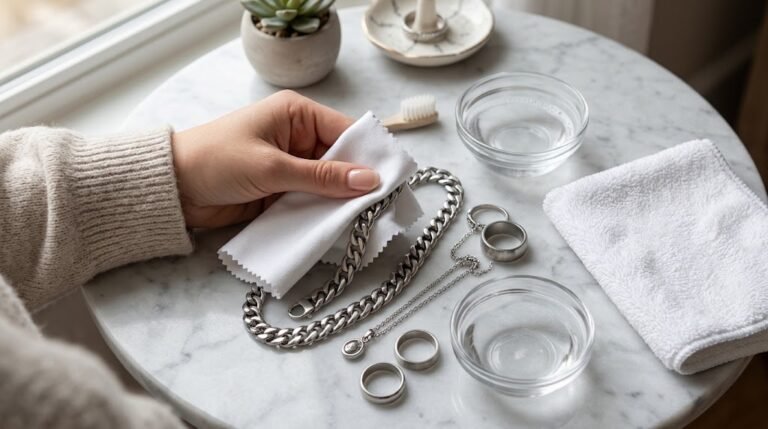
Stainless steel jewelry is popular because it is durable, affordable, and easy to maintain. From everyday necklaces and chains to rings and bracelets, it can keep its attractive appearance with regular care. However, sweat, body oils, lotion, perfume, and everyday dirt can gradually leave jewelry looking dull.
The good news is that learning how to clean stainless steel jewelry does not require expensive products or complicated equipment. In most cases, mild dish soap, lukewarm water, and a soft cloth are enough to remove everyday buildup.
However, some stainless steel jewelry has gold-colored plating, decorative coatings, gemstones, or glued components that require extra care. This guide explains how to clean different pieces safely, what products to avoid, and how to maintain their shine.
What You Need for Stainless Steel Jewelry Cleaning
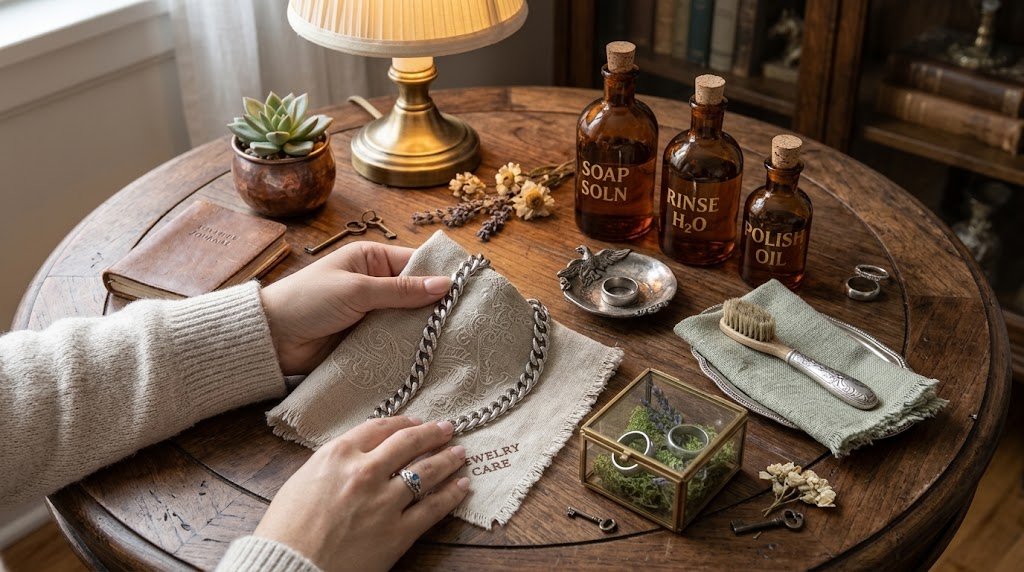
Before starting, gather a few simple supplies:
- Mild dish soap
- Lukewarm water
- A small bowl
- A soft microfiber cloth
- A very soft-bristled brush for suitable pieces
- A clean, dry towel
Avoid abrasive sponges, steel wool, rough brushes, and harsh household cleaners. These products can scratch the surface or damage decorative finishes.
If your jewelry contains pearls, glued stones, or gold plating, check the manufacturer’s care instructions before using water or cleaning products.
How to Clean Stainless Steel Jewelry at Home
The simplest method works well for many uncoated stainless steel pieces without delicate decorations.
Step 1: Prepare a Cleaning Solution
Fill a small bowl with lukewarm water and add a few drops of mild dish soap. Mix gently to distribute the soap.
Avoid boiling or very hot water. Lukewarm water is sufficient for removing ordinary dirt and oils.
Step 2: Clean the Jewelry Gently
Dip a soft cloth into the solution and wipe the jewelry carefully. For suitable pieces, use a very soft brush to reach small gaps, chain links, and textured areas.
Do not scrub aggressively, particularly around clasps, settings, or decorative details.
Step 3: Rinse Away Soap
Wipe the jewelry with a clean cloth dampened with fresh water, or rinse it carefully if the piece is suitable for rinsing.
For small items, use a separate bowl rather than holding them over an open sink. This helps prevent accidental loss.
Step 4: Dry Completely
Pat the jewelry dry with a clean microfiber cloth. Pay attention to chain links, clasps, and other areas where water may collect.
Allow the piece to air-dry completely before storing it. Proper drying helps prevent water spots and moisture buildup.
How to Clean Different Types of Stainless Steel Jewelry
Although the basic method is similar, chains, rings, necklaces, and bracelets have different shapes and cleaning needs.
| Jewelry Type | Recommended Method | Important Tip |
|---|---|---|
| Stainless steel chains | Mild soapy water and a soft cloth | Clean gently between links |
| Stainless steel necklaces | Damp microfiber cloth and mild soap if suitable | Protect pendants and decorative details |
| Stainless steel rings | Mild soap and a soft cloth | Check gemstone settings before cleaning |
| Stainless steel bracelets | Wipe with a damp cloth and dry thoroughly | Clean around clasps and joints |
| Gold-colored stainless steel | Gentle wiping with a soft cloth | Avoid abrasive polishing |
| Gemstone jewelry | Follow the stone and setting care instructions | Do not assume every stone can be soaked |
How to Clean a Stainless Steel Necklace
Necklaces often collect perfume, lotion, sweat, and skin oils, especially around the clasp and pendant.
First, check whether the necklace is plain stainless steel or includes plating, gemstones, or glued decorations.
For a suitable plain necklace, wipe it with a soft cloth dampened with mild soapy water. Use a soft brush for accessible areas between chain links, then remove soap residue with a clean damp cloth.
Dry the necklace thoroughly before storing it. If the pendant contains delicate stones or glued parts, clean those areas separately according to the manufacturer’s instructions.
How to Clean Stainless Steel Rings
Rings collect dirt from everyday activities, and residue can accumulate underneath decorative settings.
For a plain stainless steel ring, use lukewarm water, mild soap, and a soft cloth. Gently clean around the inside and outside of the band.
If the ring contains a gemstone, enamel, or glued decoration, identify those materials before cleaning. Some stones and settings cannot safely tolerate soaking or brushing.
If a stone is loose, avoid cleaning the ring at home until a jeweler has checked it.
How to Clean Stainless Steel Bracelets
Bracelets can trap sweat and dirt around links, hinges, and clasps.
Wipe the surface with a soft cloth and mild soapy water when appropriate. Use a soft brush only where the construction allows it, and avoid forcing water into mechanisms or decorative joints.
Rinse or wipe away soap residue, then dry every section carefully. For bracelets with leather inserts or mixed materials, follow the care instructions for each component.
How to Restore the Shine of Stainless Steel Jewelry
If your jewelry looks dull, everyday residue may be covering its natural shine. Begin with gentle cleaning instead of immediately trying a polishing product.
Use a Microfiber Cloth
After cleaning, gently buff plain stainless steel with a clean microfiber cloth. This helps remove fingerprints and light surface marks without the harsh abrasion associated with rough materials.
Avoid Abrasive Polishing Products
Steel wool, rough scouring pads, and abrasive powders can scratch jewelry. Gold-colored coatings and other decorative finishes may be particularly vulnerable.
If the surface remains dull after cleaning, the issue may be scratches, worn plating, or surface damage rather than dirt. Cleaning cannot always restore a damaged finish.
Be Careful With Gold-Colored Stainless Steel
Some jewelry has a gold-colored coating over stainless steel. Avoid vigorous polishing, abrasive pastes, and aggressive chemical cleaners because they may wear away the coating.
Use a soft, slightly damp cloth and dry the piece carefully. Follow the manufacturer’s instructions for coated jewelry.
What to Avoid When Cleaning Stainless Steel Jewelry
Choosing the right products is an important part of stainless steel jewelry cleaning.
1. Bleach and Chlorine
Avoid bleach and chlorine-based cleaners. Harsh chemicals can damage jewelry finishes and may affect the metal under certain conditions.
Remove jewelry before swimming in chlorinated pools or handling strong household cleaning products.
2. Toothpaste and Abrasive Powders
Toothpaste and abrasive powders can scratch polished surfaces or damage decorative coatings. Mild dish soap is a safer starting point for ordinary dirt.
3. Rough Brushes and Steel Wool
These materials may leave scratches that make jewelry look dull. Always choose a soft cloth and, when appropriate, a very soft brush.
4. Strong Acids and Unverified DIY Cleaners
Avoid experimenting with vinegar, strong acids, or mixed household chemicals, particularly on coated jewelry or pieces with stones. The metal, finish, and decorative components may respond differently.
5. Excessive Heat
Very hot water and sudden temperature changes may damage some stones, adhesives, and decorative components. Lukewarm water is generally sufficient for suitable plain stainless steel pieces.
How to Keep Stainless Steel Jewelry Clean Longer
Regular care can reduce buildup and help your jewelry maintain its appearance.
- Wipe after wearing: Use a soft cloth to remove sweat and fingerprints.
- Apply perfume first: Let perfume, lotion, and hairspray dry before putting on jewelry.
- Remove jewelry for cleaning tasks: Protect it from household chemicals and abrasive materials.
- Store pieces separately: Use a soft pouch or jewelry compartment to reduce scratches.
- Keep jewelry dry: Dry pieces completely before storing them.
- Check clasps and settings: Stop wearing a piece if a clasp breaks or a gemstone becomes loose.
These habits are simple, but they can reduce the need for frequent deep cleaning.
Frequently Asked Questions
1. What is the best way to clean stainless steel jewelry?
For many plain stainless steel pieces, mild dish soap, lukewarm water, and a soft microfiber cloth are sufficient. Rinse or wipe away the soap and dry the jewelry completely.
2. Can I clean stainless steel jewelry with vinegar?
It is better not to use vinegar as a universal jewelry cleaner. Its acidity may be unsuitable for certain finishes, coatings, stones, and decorative components. Mild soapy water is a safer first choice for suitable plain stainless steel.
3. Can I use baking soda to clean stainless steel jewelry?
Avoid rubbing baking soda onto jewelry because its abrasive action may scratch polished surfaces or damage coatings. Use a soft cloth and mild soap instead.
4. How do I clean a stainless steel necklace without damaging it?
Wipe the necklace gently with a soft cloth and mild soapy water if its materials allow it. Pay attention to chain links and the clasp, then dry it completely. Follow special care instructions for pendants, stones, and plated finishes.
5. Does stainless steel jewelry tarnish?
Stainless steel generally resists tarnishing better than many other metals, but it can still collect dirt, develop scratches, or lose its shine. Decorative coatings may also wear over time.
6. Can stainless steel jewelry get wet?
Plain stainless steel generally tolerates occasional contact with water, but the entire jewelry piece may not be water-safe. Gemstones, adhesives, plating, and mixed materials can have different requirements. Dry jewelry after cleaning and follow the manufacturer’s guidance.
Conclusion
Learning how to clean stainless steel jewelry is simple when you use gentle products and the right technique. Mild dish soap, lukewarm water, and a soft microfiber cloth can remove everyday dirt from many plain stainless steel chains, necklaces, rings, and bracelets.
Avoid harsh chemicals, abrasive products, and aggressive polishing, especially on gold-colored coatings and jewelry with delicate stones. Dry each piece thoroughly and store it separately to help prevent scratches and moisture buildup.
With regular care and careful cleaning, you can keep your stainless steel jewelry looking attractive and ready to wear
