

Jewelry can make everyday outfits more attractive and special occasions more memorable. However, keeping necklaces, rings, bracelets, and earrings in good condition requires proper storage. Without an organized system, jewelry can become tangled, scratched, tarnished, or damaged.
Knowing how to store jewelry correctly is important because different materials need different levels of care. Gold, silver, pearls, gemstones, and fashion jewelry do not all react the same way to moisture, air, sunlight, and friction.
Your wearing habits also matter. Jewelry you use every day should be easy to access, while expensive or occasional pieces need safer storage.
This guide explains how to organize jewelry by material and wearing frequency, choose suitable storage options, and protect your collection from common damage.
Why Proper Jewelry Storage Matters
Jewelry storage is not just about keeping accessories in one place. The right method helps preserve their appearance and makes it easier to find what you need.
Here are some important benefits:
- Prevents scratches: Separate compartments reduce contact between jewelry pieces.
- Reduces tarnishing: Suitable storage can limit exposure to air and moisture.
- Protects delicate materials: Pearls and softer gemstones need extra care.
- Prevents tangling: Hanging or individual storage keeps necklaces organized.
- Saves time: A clear system makes everyday accessories easier to find.
- Protects valuable pieces: Secure storage reduces the risk of loss or accidental damage.
How to Store Jewelry by Material
The first step is to separate jewelry according to its material. Different metals and gemstones have different storage requirements.
1. Gold Jewelry
Gold is relatively resistant to tarnishing, but it can still develop scratches when stored with other jewelry. Gold-plated pieces also need extra care because their outer coating can wear away.
Best storage methods:
- Keep each piece in a soft pouch or separate compartment.
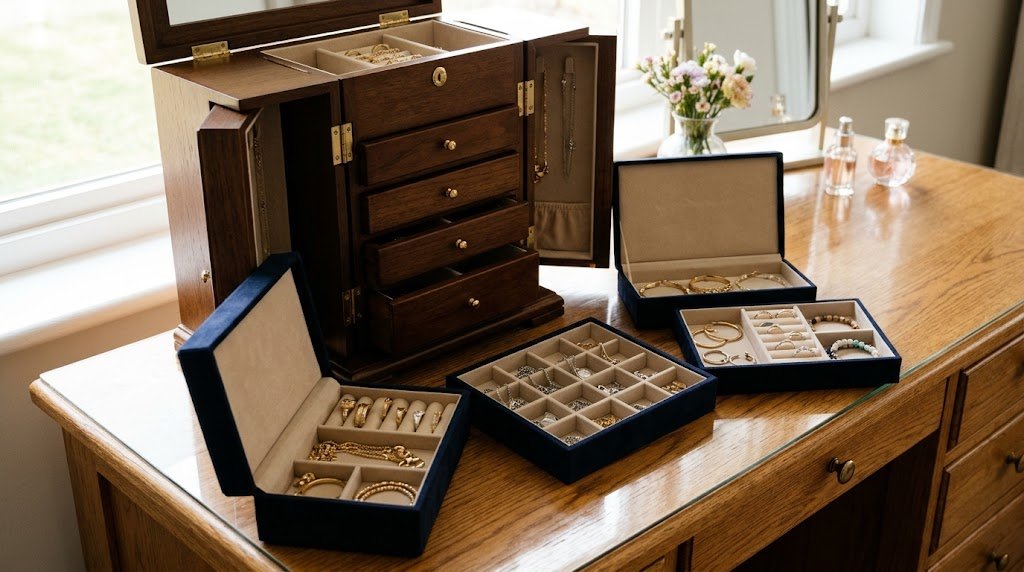
- Use a lined jewelry box to reduce scratches.
- Store gold chains individually to prevent tangling.
- Keep gold-plated jewelry away from moisture and chemicals.
- Avoid placing heavy pieces on delicate gold chains.
Solid gold jewelry does not usually require airtight storage, but keeping it clean and dry helps maintain its appearance.
2. Silver Jewelry
Silver can tarnish when exposed to air, humidity, and certain chemicals. This is why silver jewelry often requires more careful storage than gold.
Best storage methods:
- Store silver in anti-tarnish pouches or cloth.
- Keep pieces dry before putting them away.
- Use separate compartments to prevent scratches.
- Avoid storing silver in bathrooms or humid areas.
- Keep it away from perfumes and cleaning products.
For long-term storage, anti-tarnish materials can help slow discoloration.
3. Pearl Jewelry
Pearls are delicate organic gems that can be damaged by chemicals, rough surfaces, and excessive dryness.
Best storage methods:
- Place pearls in a soft fabric pouch.
- Keep them separate from harder gemstones and metals.
- Avoid plastic bags for long-term storage.
- Store them away from direct sunlight and heat.
- Make sure they are clean and dry before storage.
Pearls should be handled gently because their surface can scratch more easily than many other gemstones.
4. Diamond and Gemstone Jewelry
Diamonds are extremely hard, but they can still scratch other jewelry. Some gemstones, such as opals and turquoise, are more sensitive and require additional protection.
Best storage methods:
- Store each piece separately.
- Use padded compartments or individual pouches.
- Keep softer gemstones away from harder stones.
- Protect delicate settings from pressure and impact.
- Follow specific care instructions for unusual gemstones.
Avoid placing all gemstone jewelry together in one box, as pieces can damage one another.
5. Fashion and Costume Jewelry
Fashion jewelry may contain plated metals, decorative coatings, glue, and imitation stones. These materials can deteriorate if exposed to moisture or chemicals.
Best storage methods:
- Keep pieces in separate compartments.
- Store them in a cool, dry location.
- Avoid contact with perfume and lotions.
- Keep coated pieces away from water.
- Use soft pouches for delicate designs.
Fashion jewelry may require more frequent inspection because its coatings and decorative elements can wear down over time.
Jewelry Storage Guide by Material
Use this table as a quick reference when deciding how to store different types of jewelry.
| Jewelry Material | Recommended Storage | Main Concern |
|---|---|---|
| Gold | Soft pouch or lined box | Scratches |
| Silver | Anti-tarnish pouch | Tarnishing |
| Pearls | Soft fabric pouch | Scratches and chemicals |
| Diamonds | Separate padded compartment | Scratching other pieces |
| Soft gemstones | Individual protective pouch | Surface damage |
| Fashion jewelry | Dry, separate compartments | Coating damage |
How to Organize Jewelry by How Often You Wear It
Material is important, but your daily habits should also influence your storage system. Jewelry you wear regularly should be easy to reach, while valuable pieces you rarely use should be stored more securely.
1. Everyday Jewelry
Everyday jewelry includes simple earrings, rings, bracelets, and necklaces that you wear frequently.
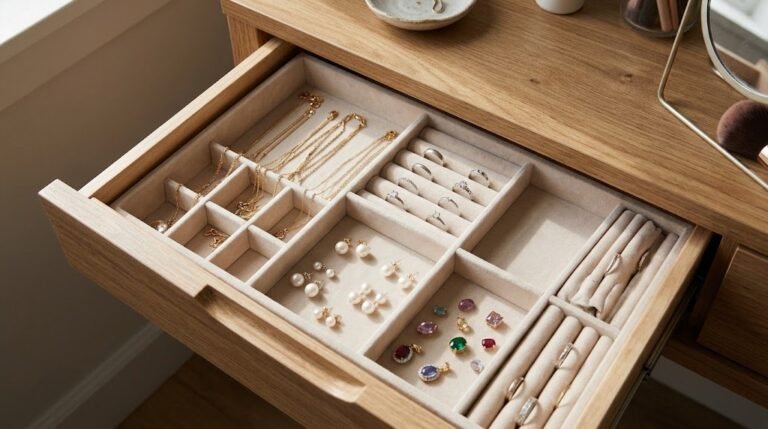
Keep these items in an accessible jewelry tray or organizer near your dressing area.
Organization tips:
- Use a small tray for frequently worn pieces.
- Keep necklaces on separate hooks.
- Place everyday earrings in divided compartments.
- Store rings in a dedicated ring holder.
- Keep the tray away from water and direct sunlight.
Choose a location that is convenient but not exposed to unnecessary moisture.
2. Weekly Jewelry
Weekly jewelry includes accessories that you wear occasionally for work, meetings, dinners, or social events.
Store these pieces in a drawer organizer or a jewelry box with separate sections.
Group items by type, such as necklaces, earrings, bracelets, and rings. This makes it easier to choose matching accessories without disturbing the entire collection.
3. Special Occasion Jewelry
Special occasion jewelry may include statement necklaces, formal earrings, expensive bracelets, and pieces worn for weddings or celebrations.
These items should be stored carefully to protect their finish and design.
Recommended methods:
- Use individual soft pouches.
- Keep valuable pieces in a secure jewelry box.
- Separate delicate stones from other accessories.
- Store matching sets together in labeled compartments.
- Avoid unnecessary handling.
4. Fine and Expensive Jewelry
Fine jewelry deserves extra protection, particularly when it contains valuable metals or gemstones.
When considering how to store fine jewelry, focus on security, separation, and suitable environmental conditions.
Use a sturdy jewelry box with a soft interior. For particularly valuable items, consider a secure safe or locked storage area.
Keep an inventory of important pieces and their purchase or appraisal records separately.
Best Jewelry Storage Options
Choosing the right organizer makes your collection easier to manage.
| Storage Option | Best For | Main Benefit |
|---|---|---|
| Jewelry box | Mixed collections | Keeps pieces organized |
| Drawer organizer | Everyday accessories | Easy access |
| Hanging organizer | Necklaces | Helps prevent tangling |
| Ring holder | Rings | Keeps rings separated |
| Soft pouches | Fine and delicate jewelry | Reduces scratches |
| Anti-tarnish storage | Silver jewelry | Helps slow tarnishing |
| Secure safe | Valuable jewelry | Additional security |
Common Jewelry Storage Mistakes to Avoid
Even an expensive jewelry collection can become damaged through poor storage habits.
Storing Everything Together
Putting necklaces, rings, earrings, and bracelets in one container can cause tangling and scratches. Use separate compartments instead.
Keeping Jewelry in the Bathroom
Bathrooms often have high humidity, which can encourage tarnishing and damage some jewelry materials. Choose a dry storage location.
Leaving Jewelry Exposed to Sunlight
Direct sunlight and heat may affect certain gemstones, pearls, and decorative materials. Keep delicate pieces away from windows.
Storing Jewelry Before It Is Dry
Moisture, sweat, perfume, and lotion can affect jewelry finishes. Clean and dry pieces according to their material before storing them.
Using Plastic Bags for Every Type of Jewelry
Plastic storage is not suitable for every material, particularly certain organic gems such as pearls. Choose storage based on the jewelry type.
A Simple Weekly Jewelry Organization Routine
A short routine can help keep your collection in good condition.
- Return everyday jewelry to its assigned compartment.
- Separate any tangled necklaces carefully.
- Check delicate pieces for loose stones or damaged clasps.
- Wipe jewelry using an appropriate soft cloth.
- Make sure each piece is dry before storage.
- Check that valuable jewelry is safely stored.
Regular organization also helps you notice missing pieces or damage before it becomes more serious.
Frequently Asked Questions
1. What is the best way to store jewelry at home?
The best method is to use a lined jewelry box with separate compartments. Store each piece according to its material and keep delicate or valuable jewelry in individual protective pouches.
2. Should jewelry be stored in separate bags?
Yes. Individual soft pouches help prevent scratches and tangling. Anti-tarnish pouches are particularly useful for silver jewelry.
3. How should I store fine jewelry?
Store fine jewelry in a secure, dry location using separate padded compartments or soft pouches. Keep valuable pieces protected from moisture, scratches, and accidental loss.
4. Is it okay to store jewelry in the bathroom?
It is generally better to avoid bathroom storage. Humidity and temperature changes can contribute to tarnishing and may affect delicate materials.
5. How do I prevent necklaces from tangling?
Store necklaces individually using hooks, hanging organizers, or separate compartments. For delicate chains, close the clasp before storing them.
6. How often should I organize my jewelry?
Return pieces to their proper places after wearing them and perform a quick organization check weekly. Inspect valuable and delicate jewelry periodically for signs of damage.
7. Can I store gold and silver jewelry together?
It is better to store them separately. Individual compartments help prevent scratches and make it easier to use the appropriate storage method for each metal.
Conclusion
A well-organized jewelry collection is easier to maintain, protects valuable accessories, and saves time when getting ready. The most effective approach is to organize jewelry according to both material and wearing frequency.
Keep gold and silver in suitable separate storage, protect pearls and delicate gemstones with soft pouches, and place everyday accessories somewhere convenient. Fine and expensive pieces should receive additional protection in secure storage.
Learning how to store jewelry properly does not require an expensive organizer or complicated system. A few simple habits, such as separating pieces, keeping them dry, and returning them to their assigned places, can help preserve your collection for years
